If all hearing aids were created equal, everyone with hearing loss would choose invisible-in-the-canal aids. If I could design the perfect hearing aid, it would be a hearing aid hidden inside the ear, with rechargeable batteries and Bluetooth technology, yet easy to maintain, comfortable, and doesn’t make you sound like you have a bucket over your head when you talk. This would be amazing!
Unfortunately, we live in the real world, and there is no such technology that offers the best of all technologies in the smallest most discreet style possible. And that is why we have different styles of hearing aids. What style works best for each person will depend on their hearing loss and lifestyle.
Invisible-in-the-Canal Hearing Aids
Invisible-in-the-canal aids are hidden, and so they win the “best look” award. They are also hidden from wind, a big plus in the Midwest! They can’t be knocked off the ear.
Disadvantages
On the negative side, this hearing aid takes a very small, size 10 zinc air battery that will last three to five days, on average. It requires more upkeep because it is pushed deep into the canal, past the glands that secrete cerumen (ear wax). This makes it more susceptible to expensive repairs.
For those with flat moderate to severe losses, an invisible in the canal hearing aid will do a fantastic job of treating your hearing loss while preserving sound quality. For those who have some normal hearing, or mild hearing loss, this hearing aid will give the “bucket over your head” experience mentioned above.
We in the audiology world call this phenomenon “occlusion”, which essentially describes the ears feeling as if they are plugged, and when the wearer speaks or chews, the sound is unnatural and distracting. “My voice echoes back to me,” “I can’t hear anything over my chewing,” and “I sound like I am in the bottom of a well,” are all common complaints that unfortunately will remain with this style, regardless of technological advancements.
Behind-the-Ear Hearing Aids
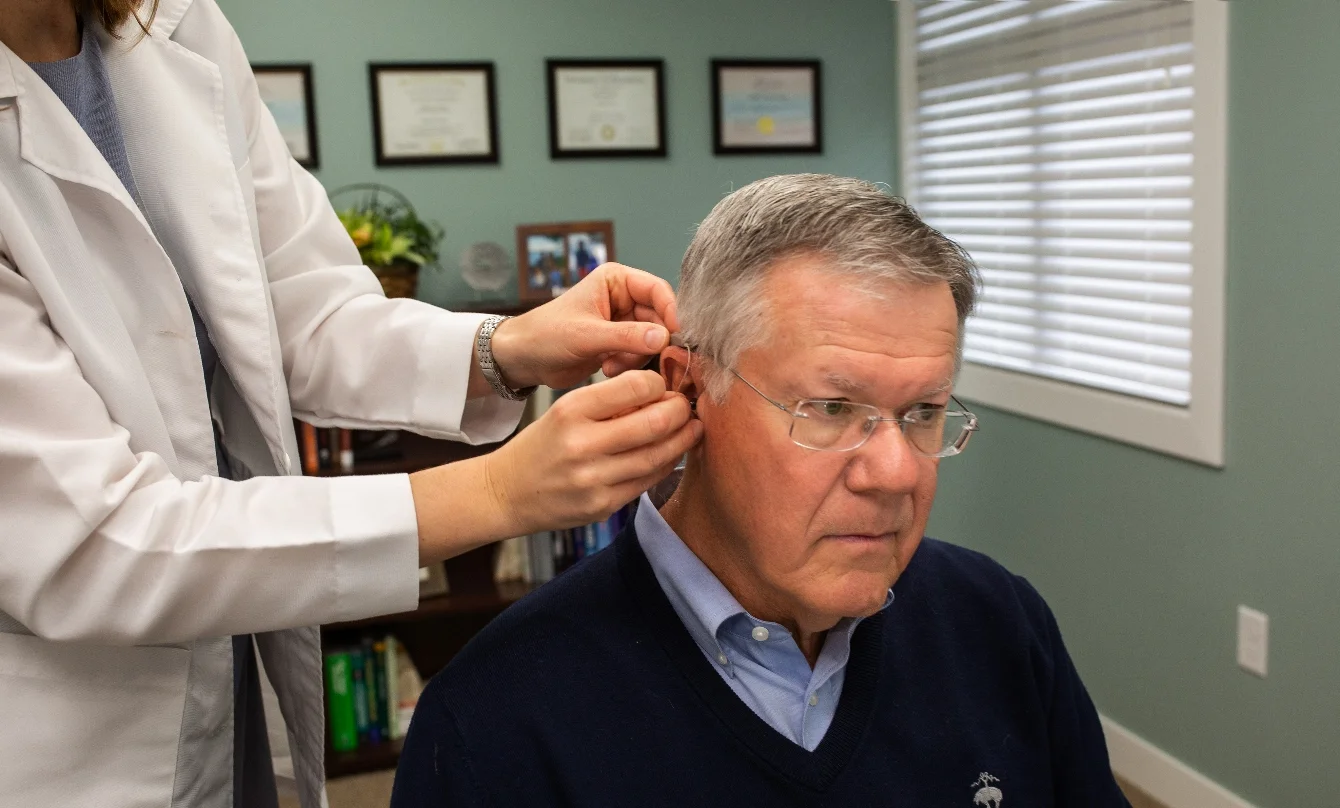
The occlusion effect plagued audiologists and hearing instrument dispensers for years and led the hearing aid manufacturers to finally create the “RIC” aid, also known as “Receiver-in-the-Canal” or “Behind-the-Ear” aid. This aid felt like it was sent from the heavens to hearing healthcare providers! The bulk of the aid is behind the ear, with only the speaker (receiver) inside the ear canal.
Benefits
This design leaves the ear mostly open, allowing low pitch sounds into the ear untouched and unprocessed. There is no more “bucket” phenomenon, because the ear is open, not completely blocked by a hearing aid.
The result is a more natural sounding hearing aid. Another benefit is there are less electronics in the ear, therefore less repairs (hopefully). Since its inception, this design has allowed for added features because it is not limited to the size and shape of the ear canal. The most notable of these advances include Bluetooth and rechargeable batteries.
Disadvantages
One significant drawback to the receiver-in-the-canal style is that it sits on top of the ear! It is more noticeable and therefore exposed to the wind. While there is wind reduction technology, wind can still an issue.
For some people, the visibility of this style is a deal breaker, which is unfortunate. Without a doubt, the RIC style is the most effective hearing loss treatment for the majority of our patients.
At our clinic, 90% of what we fit on patients is receiver in canal (RIC) style. Some patients still prefer invisible-in-the-canal and are willing to live with the drawbacks. I am always willing to try an invisible-in-the-canal style for anyone who wants to experience it for themselves, even if I have reservations on the likelihood of success. My feeling is that it is better to try something than nothing at all.
If you are considering treating your hearing loss, keep these facts in mind. While some manufacturers are pulling away from offering their top tier technology in custom styles, there are excellent options in the marketplace. At Adaptive Audiology Solutions we work with all manufacturers so we can offer a variety of solutions to our patients.
I hope this article is helpful and provides some clarity on what style of hearing aid might be best for you!

Dr. Sondra Rierson
About the Author: Dr. Sondra Rierson is an experienced audiologist with more than a decade of expertise in diagnosing and treating hearing loss. Originally from Lake View, Iowa, she is dedicated to providing personalized, patient-centered hearing care.
Subscribe to her YouTube channel for more information and helpful videos.
Join our online community!
Follow on Facebook, LinkedIn, and Instagram, and subscribe to Dr. Rierson’s YouTube channel. She frequently publishes helpful videos and tips online.


