When working as an audiologist, I always discuss the importance of protecting hearing. However, I don’t often speak about the different technologies available for hearing protection to the public, like I do with hearing aid and implantable technology.
I recently had a special encounter that got me thinking about the importance of promoting these products. I acquired a new patient that works in an industrial setting. He has a long history of noise exposure, mostly occupational noise, and his wife and family feel he doesn’t hear well. His tinnitus is really starting to bother him, and he noted that when in loud settings, like a loud gymnasium, he is uncomfortable.
He had put off coming to see me because he just didn’t feel he was the right candidate for hearing aids. He is very active and was concerned he could lose a hearing aid. He also felt he should be protecting his hearing during the day but anything he tried interfered with him hearing sounds that were necessary to hear for his safety.
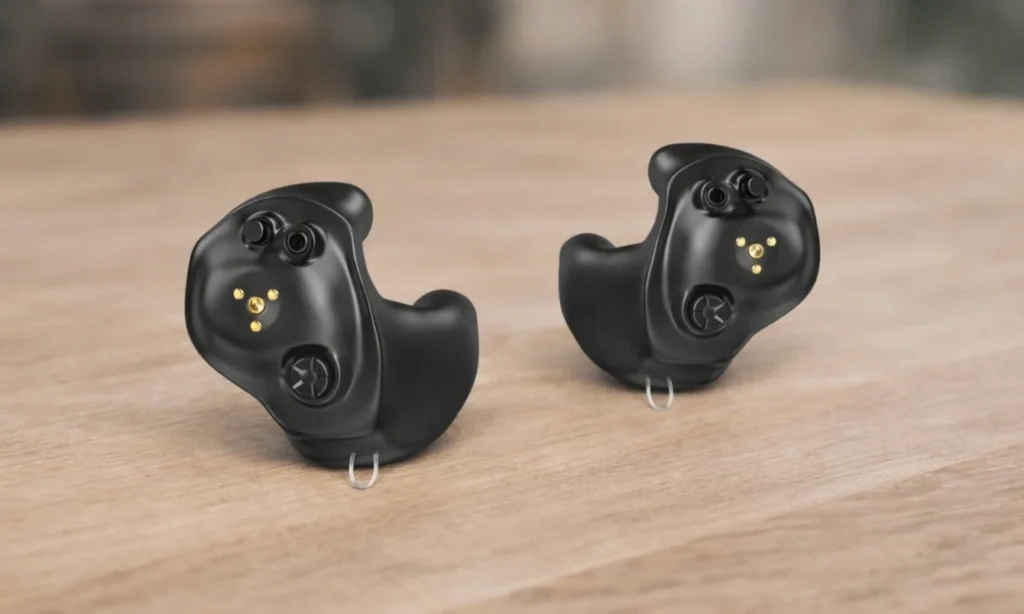
The Phantom SoundGear by Starkey
The Phantom SoundGear by Starkey is an excellent solution for this patient’s problems. This technology offers active sound suppression, meaning it provides enhancement of environmental sounds and allows for conversations to be heard more clearly, while offering protection from both sudden and continuous loud sounds.
Starkey’s SoundGear Phantom is the world’s first—and still most popular—custom, rechargeable, and Bluetooth® compatible hearing aid and protection device. Because these devices are custom fit, there will be no issues regarding comfort. It has an on/off button to help save battery life; however, it has 23 hours of battery life per charge, so running out of battery should never be a concern.
Because it can be used for Bluetooth streaming phone calls or other media, there should never be a need to take them out of the ears. This alleviates concerns regarding misplacing the devices and provides overall ease of use.
The phantom does offer mild hearing enhancement and could be used as a very basic amplification device. The volume control is the main way to control the amplification of the device, however, with an iPhone, the native controls within the phone’s software can also be used to adjust volume.
The Cost
Two of these devices and the charger cost $1,625 (at the time of publication of this article). This may seem like a lot of money to spend on hearing protection; but when considering the cost of treating hearing loss and tinnitus, it is well worth the investment.
If you are interested in learning more, I encourage you to contact your hearing healthcare professional!

Dr. Sondra Rierson
About the Author: Dr. Sondra Rierson is an experienced audiologist with more than a decade of expertise in diagnosing and treating hearing loss. Originally from Lake View, Iowa, she is dedicated to providing personalized, patient-centered hearing care.
Subscribe to her YouTube channel for more information and helpful videos.
Join our online community!
Follow on Facebook, LinkedIn, and Instagram, and subscribe to Dr. Rierson’s YouTube channel. She frequently publishes helpful videos and tips online.


